
Nose Flosser: your illustrated guide
Saline preparation, fitting the nasal tip and the complete picture guide. Open any image to see every detail.
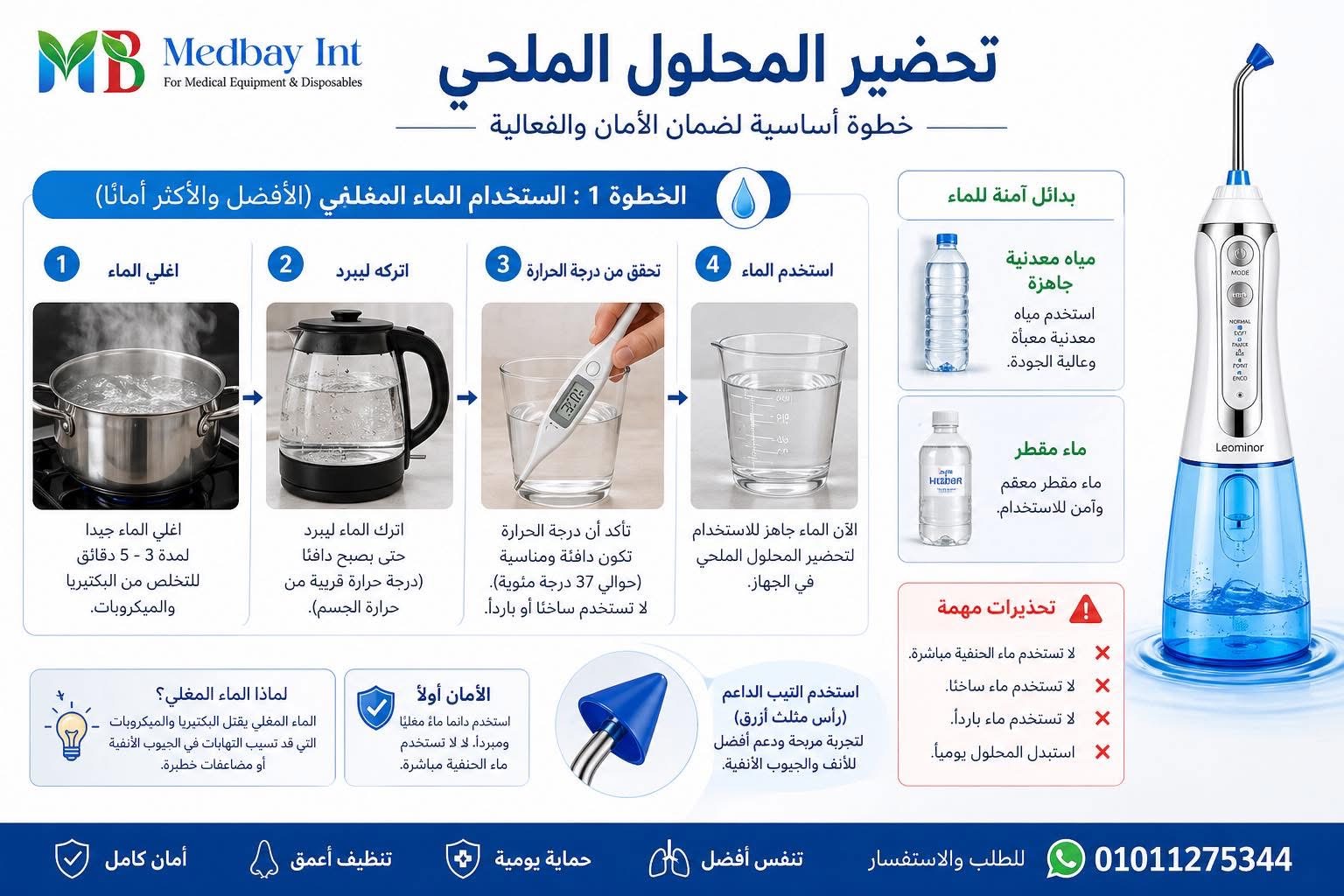
Saline preparation
Safe water and the correct saline mixture come first.
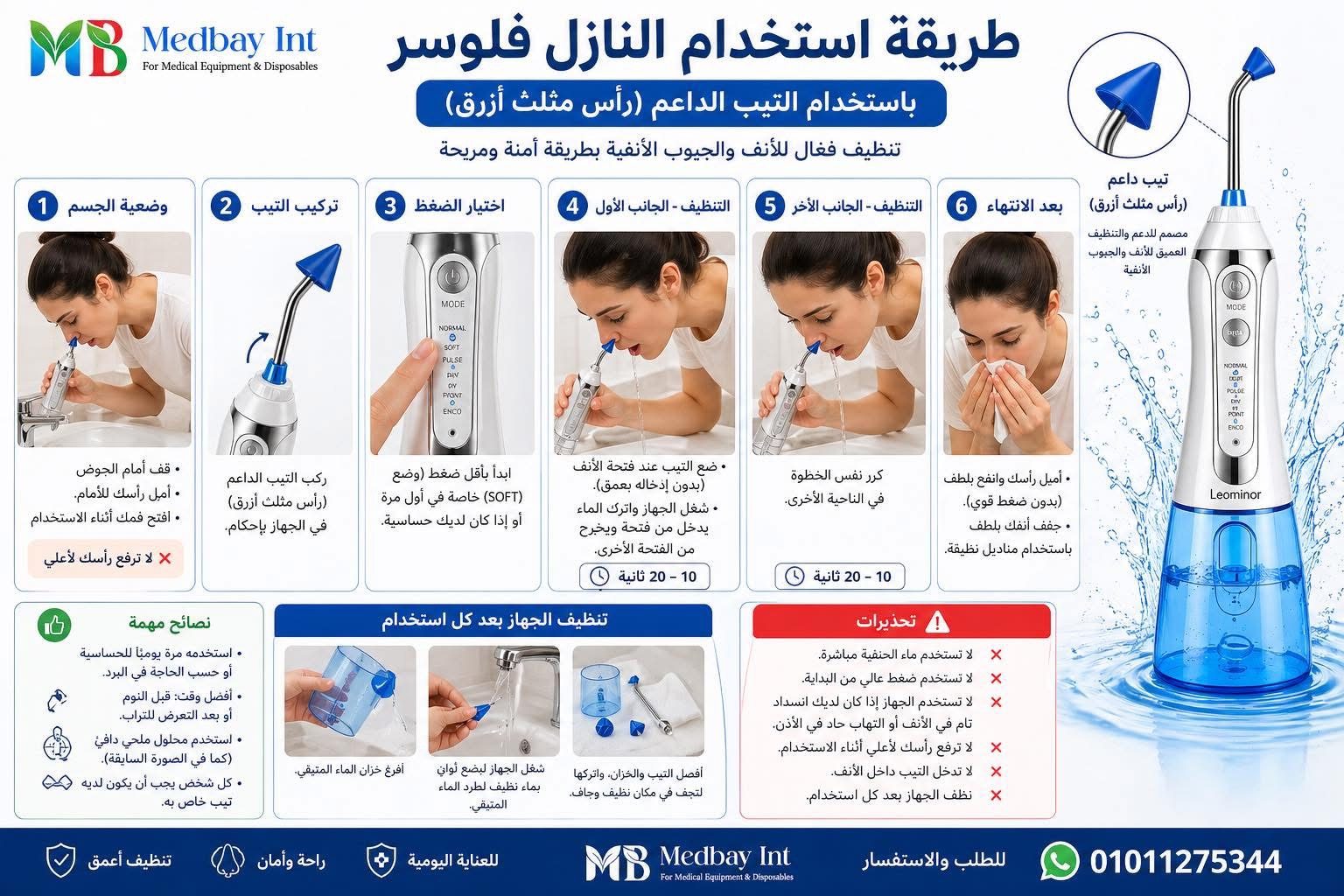
Using the nasal attachment
Body position, fitting the tip and cleaning after use.
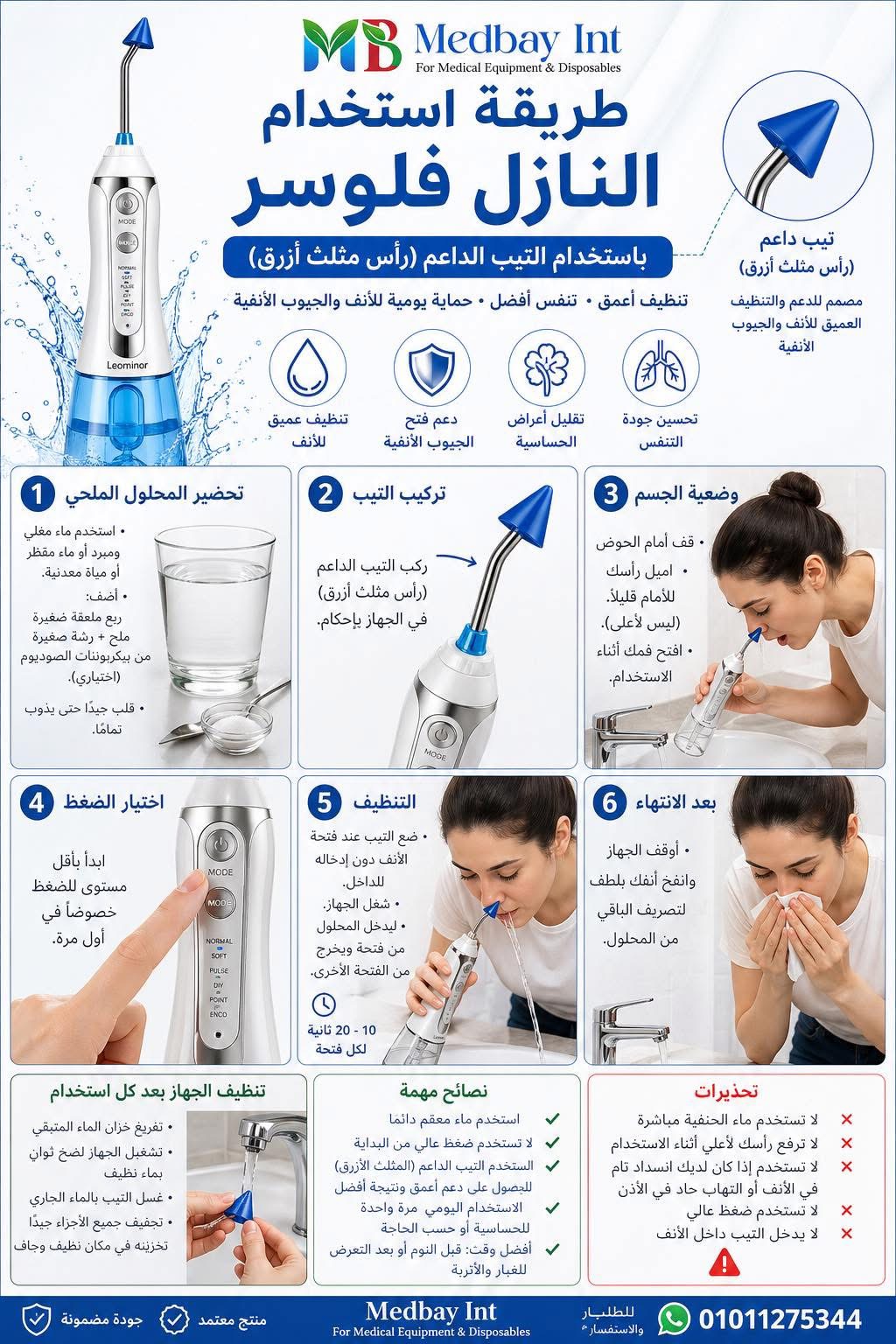
The complete picture guide
A full view of the preparation, use and cleaning sequence.
Drinking water is not automatically safe for your nose.
Choose water labelled distilled or sterile. CDC recommends a rolling boil for one minute, then cooling; three minutes above 6,500 feet. Bottled mineral water is not automatically suitable.
Key questions before you begin
What can nasal rinsing help with?
Saline rinsing can clear mucus and allergens and may ease nasal symptoms. It is not a guaranteed treatment for snoring or a replacement for assessing persistent symptoms.
When should I ask a clinician first?
Ask first for children, reduced immunity, recent nasal surgery or complete nasal blockage. Stop with pain or bleeding. Seek urgent care for headache, fever, vomiting or confusion after a nasal rinse.
Can I use my Leominor or h2ofloss?
The brand name or presence of a tip is not enough. The h2ofloss HF-2 manual prohibits nasal use and saline. Do not assume HF-2, HF-2 Plus and Elite Pro share instructions; ask for the manual matching the model on the device.
h2ofloss HF-2 · Manufacturer manualSources & review
Content reviewed on 17 November 2026. Posters are displayed as supplied by MedBay; corrections and model-specific limitations are stated beside each poster.